01
The scorecard — see where quality breaks
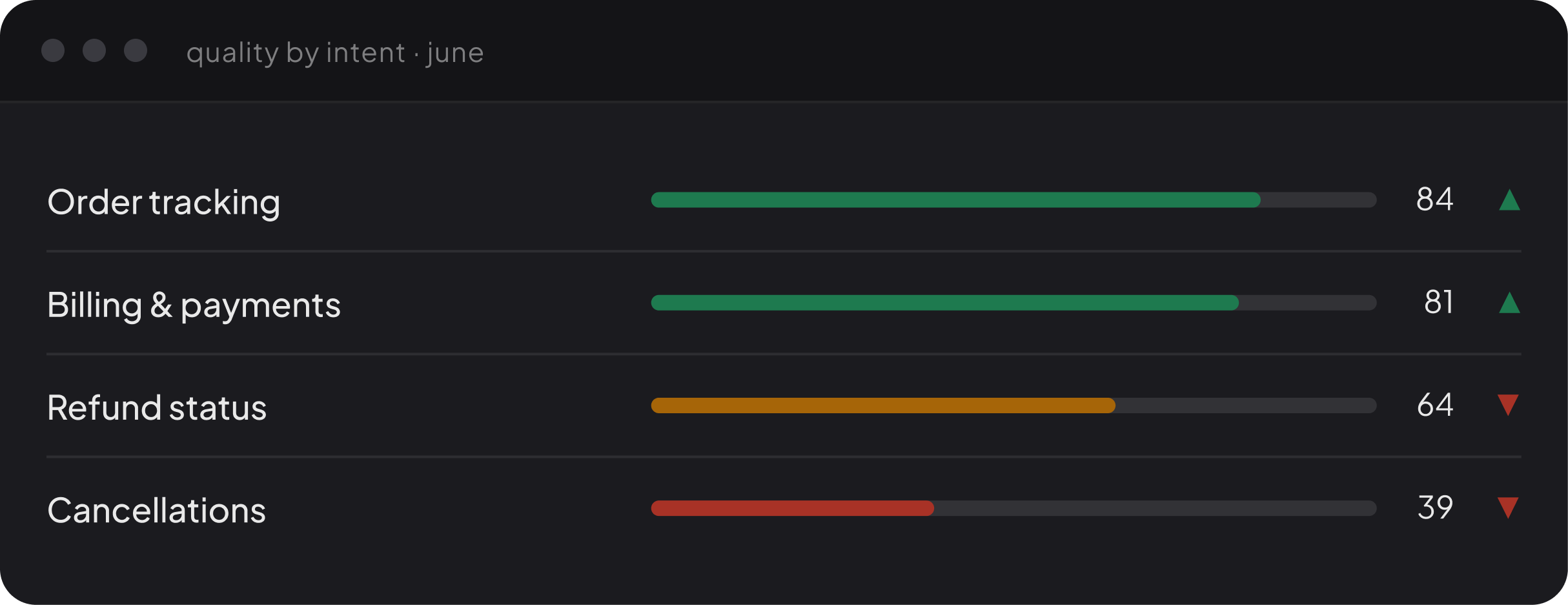
CQS and predicted CSAT for every conversation, rolled up by intent, team and channel. A Monday-morning glance shows which intent slipped and whose numbers moved.
.svg)

Independent of your bot vendor
Chat and voice, read at source
No change to your stack







/ 01
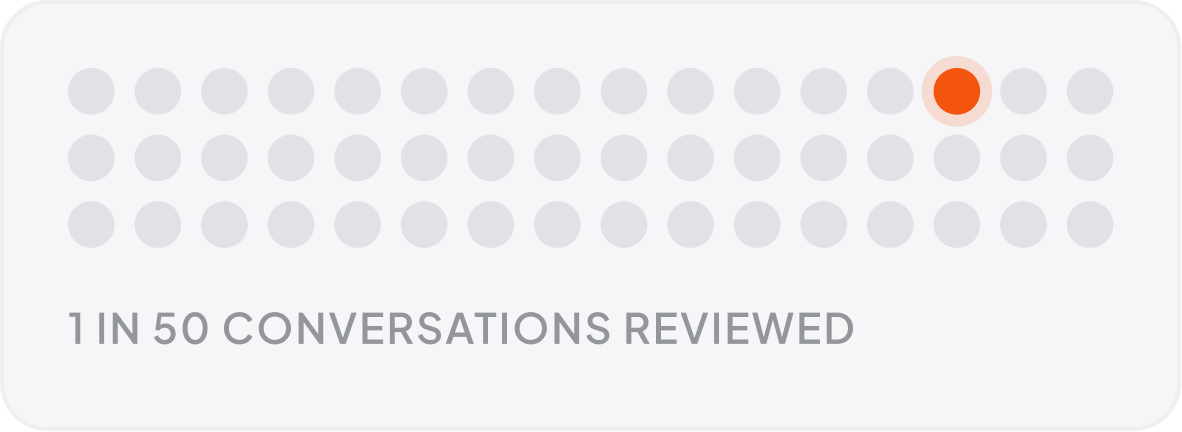
Your QA team reads a sliver of tickets and coaches from anecdote. The other 98% of conversations are ungoverned — nobody will ever look at them.
/ 02
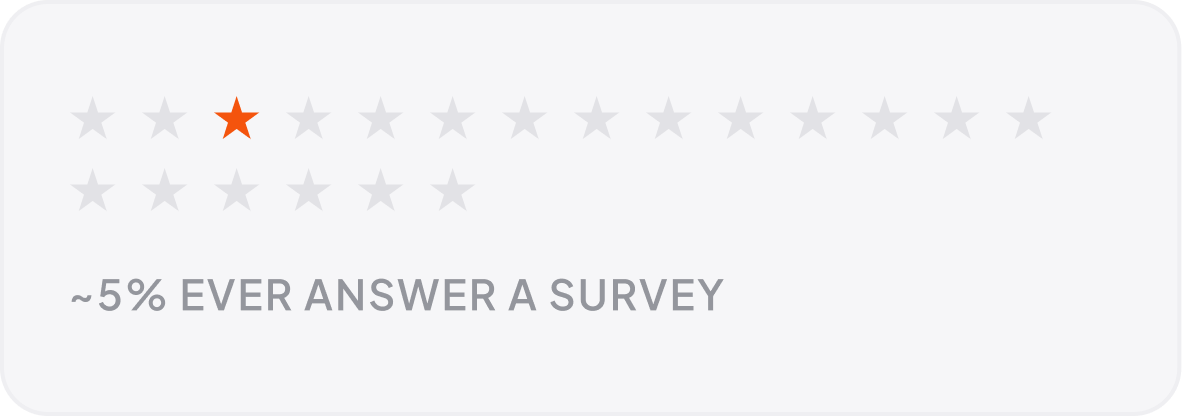
CSAT comes from the few who answer — the furious and the delighted. The silent majority, including most bot conversations, never registers at all.
/ 03
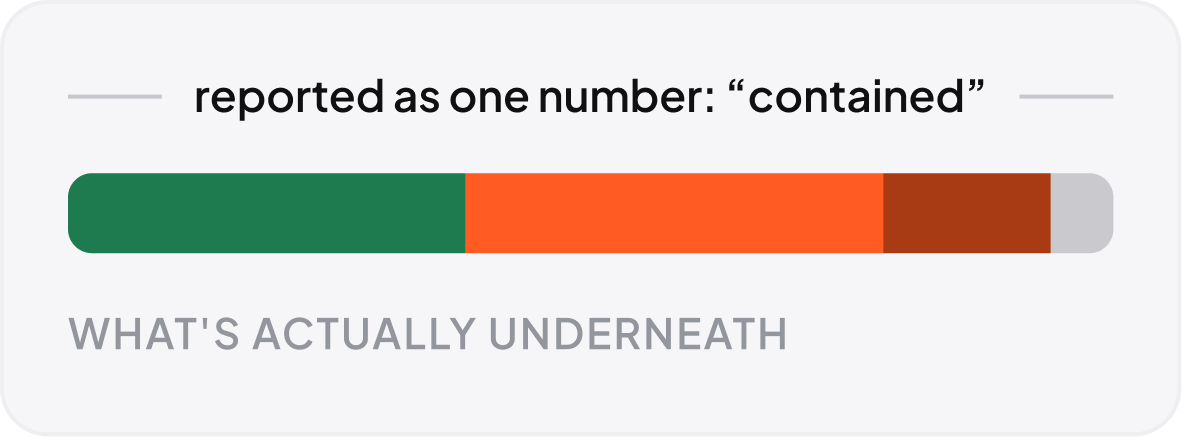
Your bot vendor's headline metric, measured by your bot vendor. It counts conversations kept away from humans — not problems solved.
Today
With Auto QA
QA coverage
2–5% of tickets, sampled
100%, every day
CSAT visibility
The ~5% who answer surveys
Predicted for every conversation
The bot's number
Containment, self-reported
Resolution, on the human rubric
Coaching
Anecdotes from random tickets
Ranked answers, evidence attached
Churn
Found in next quarter's report
Flagged mid-conversation
Bot vendors report what stayed in-channel. An audit scores whether the customer got what they came for. Three failure patterns show up in every run — here they are, verbatim.
01 · The needless question
Bot Please say or key in your nine-digit order number, followed by the pound key.
26% of calls asked for an ID the caller's phone number had already resolved. 66% of them hung up.
02 · The misread that matters
Bot Let's get you back into your account. I've sent a password-reset link to your email.
Quality falls 68 → 15 when intent is misread — and the misreads include fraud, safety anddamage reports.
03 · Churn, announced
Bot We'd hate to see you go! Would 40% off your next two boxes change your mind?
81% of customers who stated churn intent were lost anyway — despite being correctlyunderstood.
Live for every conversation, from day one. The first audit is just the first look.
01
CQS and predicted CSAT for every conversation, rolled up by intent, team and channel. A Monday-morning glance shows which intent slipped and whose numbers moved.
02
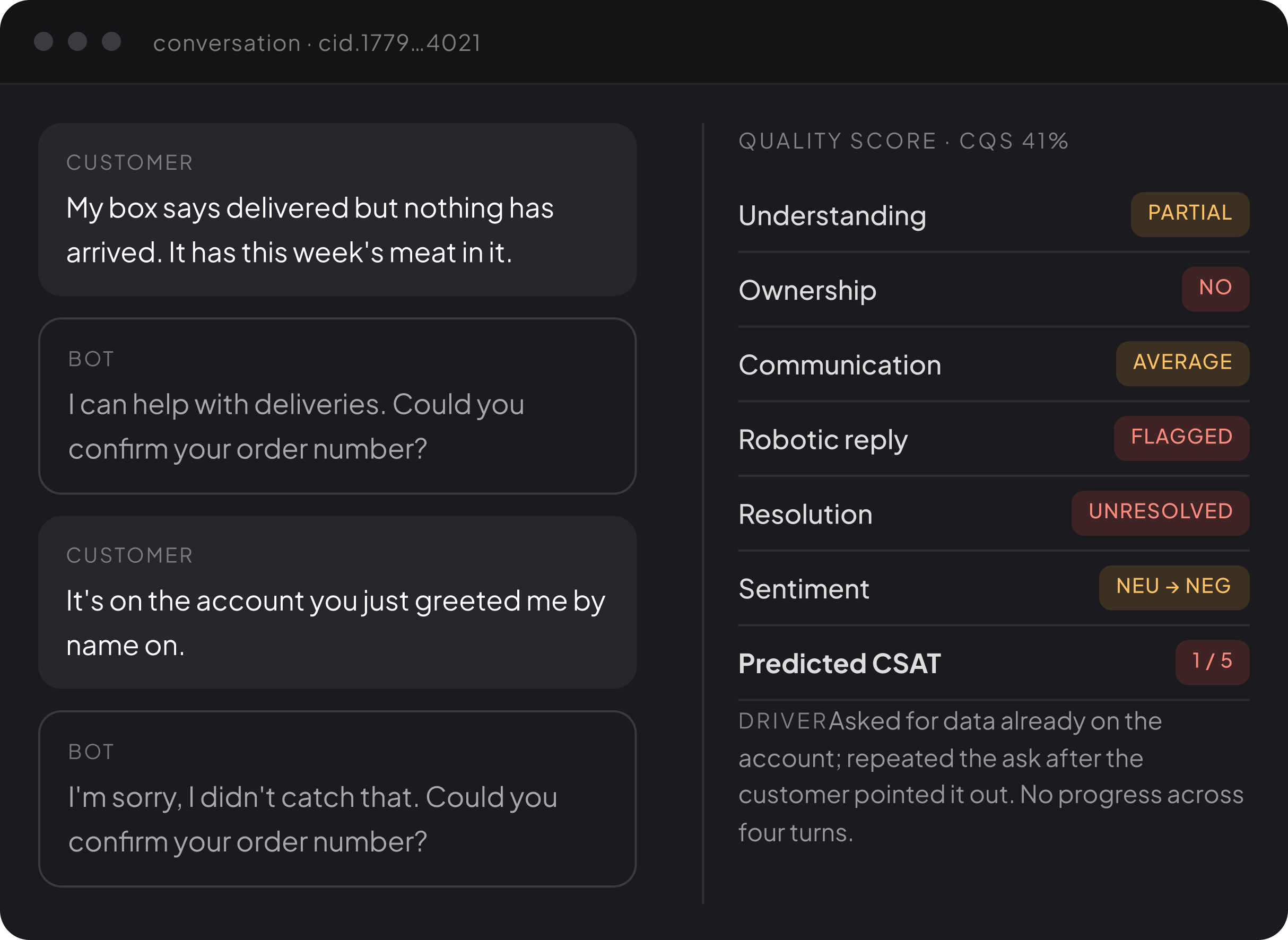
Every score opens into the transcript, the dimension-by-dimension verdicts and a plain-language driver. When the scorecard says 41%, you can judge the call yourself in one click.
Understanding
Ownership
Communication
Robotic reply
Resolution
+ pCSAT · sentiment · driver
+ dimensions of your own
03
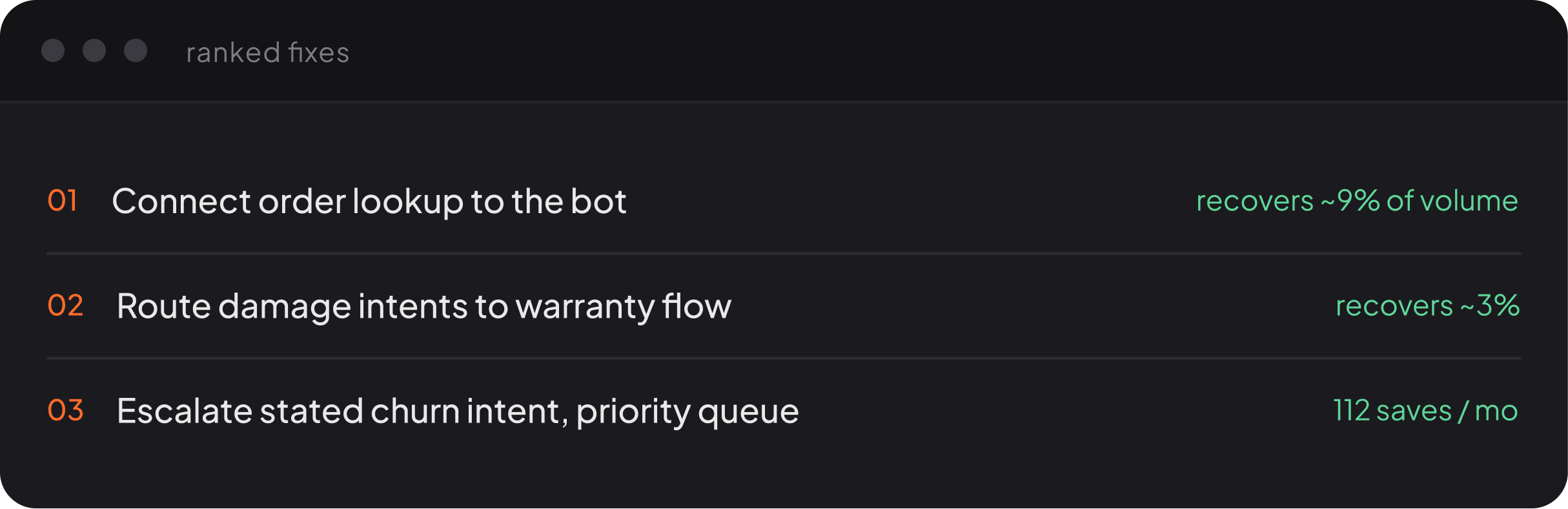
Findings rank by what they'd recover, not by how interesting they are. Most fixes are integrations and routing rules — not a new bot.
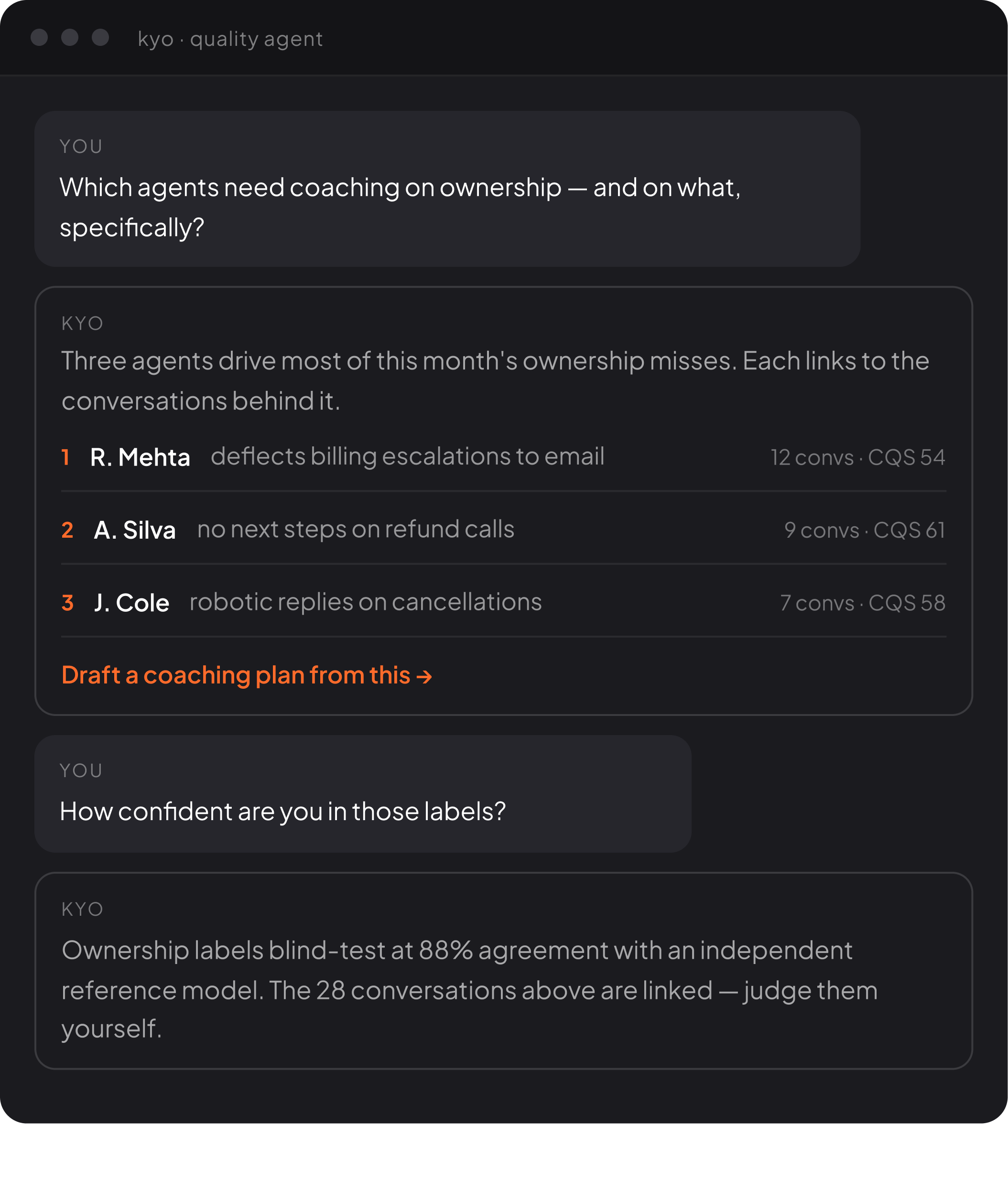
Every score on this page is queryable in plain English. Kyo is the analyst on top of Auto QA — teams ask who needs coaching and on what, why a metric moved, even how a score is calculated. Then they build coaching plans and SOPs straight from the answers.
“Which agents need coaching on understanding, ownership orcommunication — and on what, specifically?”
“Why did CQS coverage drop 32.7% last week when ticket volumebarely moved?”
“Give me the exact rule for how predicted CSAT is calculated.”
“Team health report — this week vs last, quality and pCSAT byteam.”
Real questions from live customer usage, generalised. The last one runs as a standing weekly report.
Coverage
Your QA team stops scoring a 2% sample and starts coaching from all of it. Every agent, every conversation, every day — so no complaint, churn threat or compliance risk goes unread, and coaching conversations start from a ranked list instead of an anecdote.
One scorecard
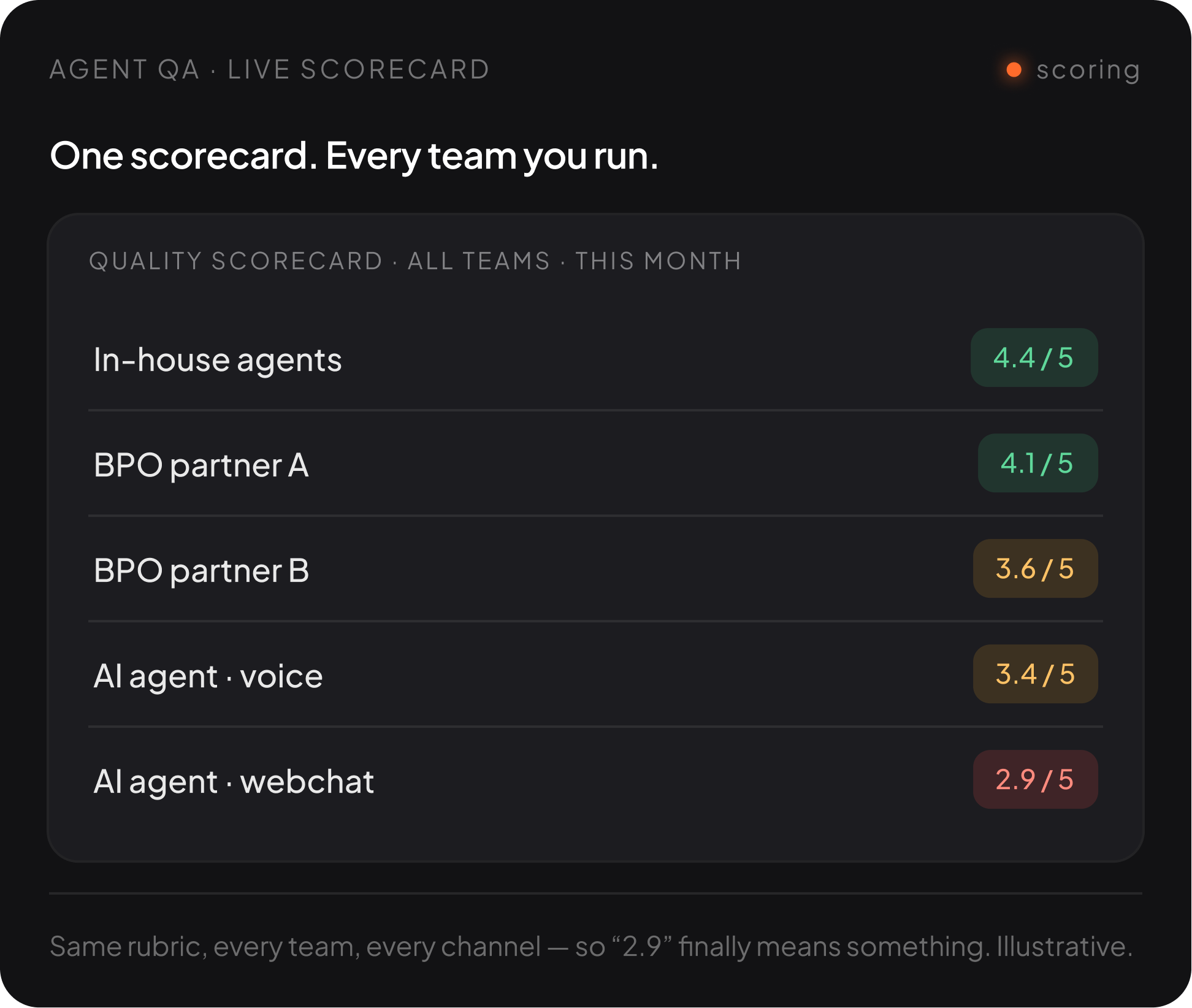
Bot analytics score the bot. QA tools score people. Auto QA scores both, identically — so when you decide whether to expand automation, fix the bot, or renegotiate a BPO contract, all three options sit on one scorecard.
Trust
Every score carries a plain-language reason and the transcript behind it, computed the same way every time and blind-tested at 88% agreement against an independent model. When an agent disputes a score, you open the conversation. When the board questions CSAT, you show the method.
We publish our agreement rates. Ask your bot vendor for theirs.
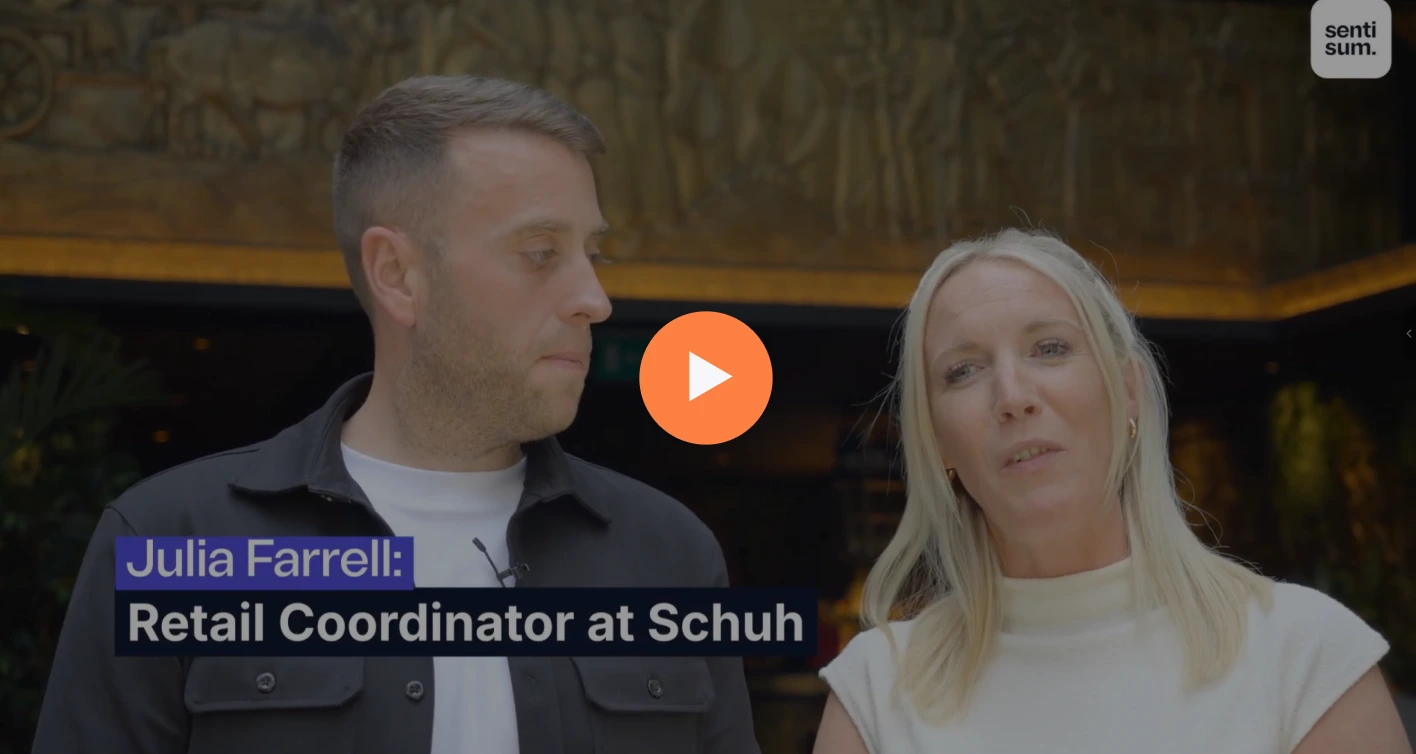
“We’re excited about Kyo. The root causes summary looks like a real game changer for how we analyze data with SentiSum.”


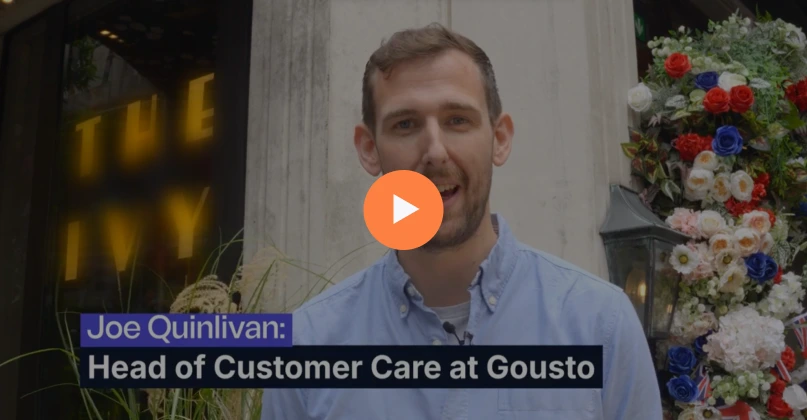
“With SentiSum, we now ingest all conversational data across channels and use it to drive meaningful change throughout the business.”


“With SentiSum in place, we quickly spotted an issue affecting dozens of drivers daily - a missed tech fix that was costing us thousands in revenue”

“We’re excited about Kyo. The root causes summary looks like a real game changer for how we analyze data with SentiSum.”
“With SentiSum, we now ingest all conversational data across channels and use it to drive meaningful change throughout the business.”
“With SentiSum in place, we quickly spotted an issue affecting dozens of drivers daily - a missed tech fix that was costing us thousands in revenue”