.webp)



.webp)
.svg)


TL;DR
- Kyo is the AI engine at the heart of SentiSum’s AI-native Voice of Customer platform.
- It analyses real customer conversations, connects patterns across data, and explains what is changing without ever making things up.
- If ChatGPT is built to imagine, Kyo is built to understand.
If you have used AI tools to write, plan, or summarize, you already know how easy they make everyday work. They help us draft emails, generate ideas, and organise thoughts in seconds.
That same creativity, though, can become a liability when accuracy matters. In customer experience, one misplaced assumption can distort how leadership sees customer truth. CX and Product teams spend hours validating AI summaries that do not match the tickets underneath.
You read an AI summary that blames courier delays, then check a few tickets and none mention a courier. That is the gap Kyo closes. It does not guess or summarise for style. It reads real customer conversations, understands what is driving them, and shows its reasoning. When accuracy drives trust, good guesses are not enough.
How Kyo Differs from ChatGPT-style Tools
In simple terms, Kyo is built for depth. Every conclusion backed by the real evidence beneath it.
What Kyo Is and Is Not
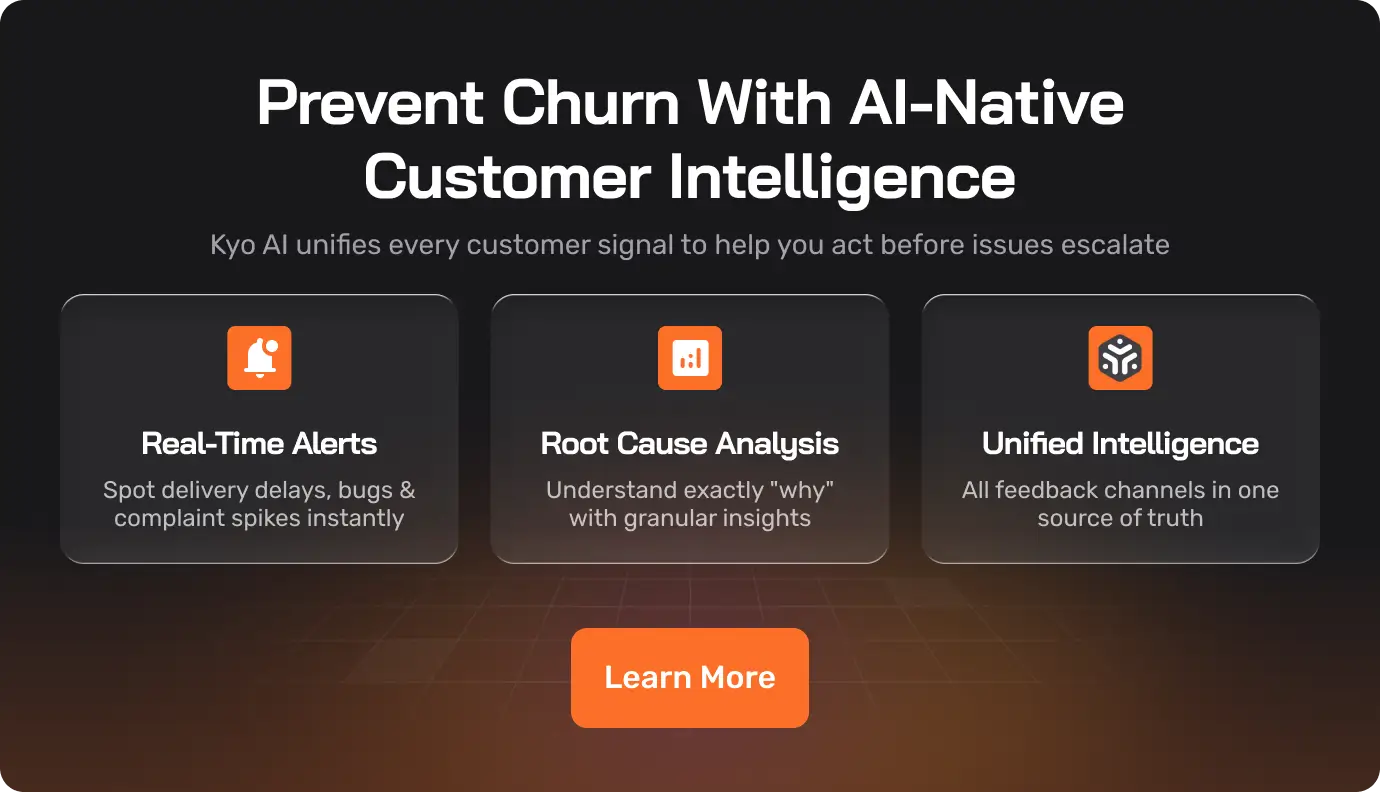
Kyo is the AI engine that powers every insight inSentiSum’s AI-native Voice of Customer platform. You access it through a simple guided conversational and natural language interface inside SentiSum. It reads thousands of support tickets, chats, reviews, and surveys, then distils what customers are really saying and why it matters.
Every time you see an insight in SentiSum, it is Kyo doing the heavy lifting in the background. It learns how your customers speak, understands the context behind their feedback, and presents it in a way that is clear, consistent, and straightforward to understand.
Kyo is not a chatbot. It is not there to chat for the sake of it or to dream up ideas. Kyo is an AI-native assistant designed for clarity, an analyst that interprets verified data, surfaces what is changing, and shows the reasoning behind every answer.
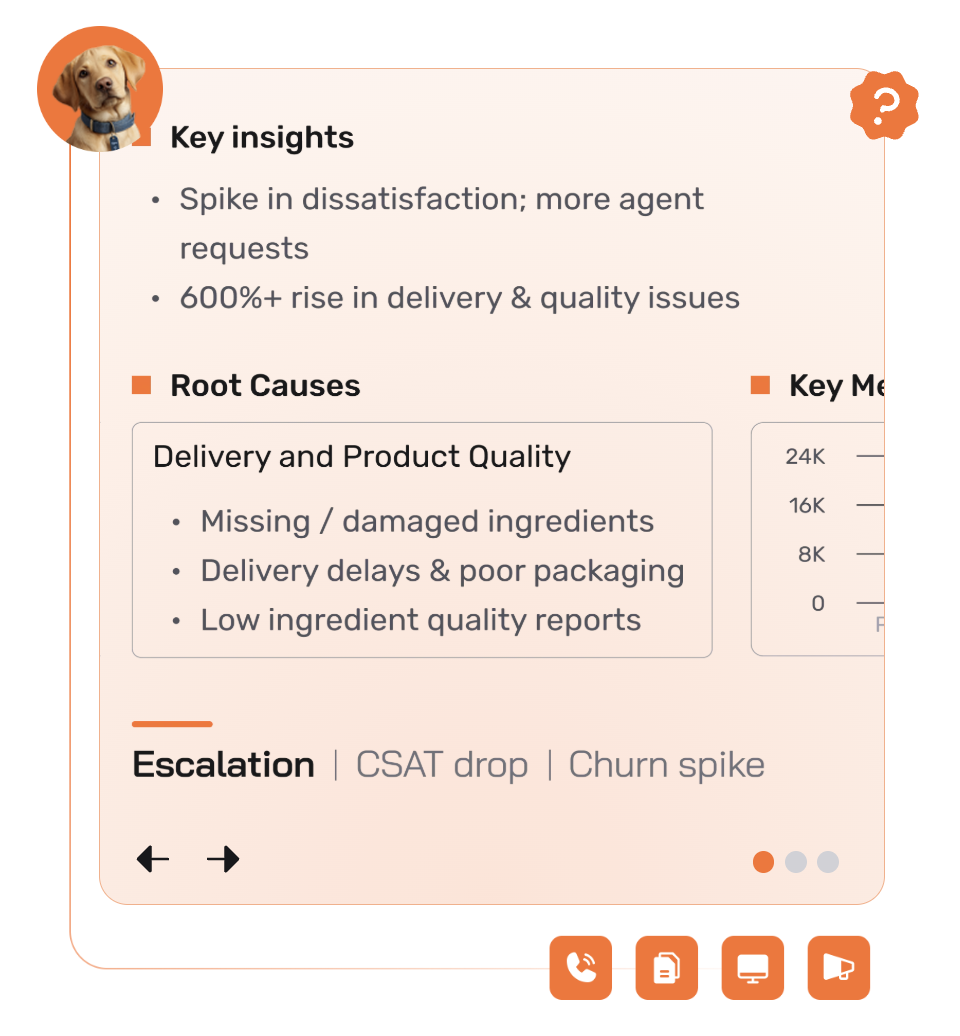
- A retail brand used Kyo to investigate a sudden rise in payment failed mentions after a checkout redesign. Instead of guessing, Kyo mapped the issue to a single error message seen only by iOS users. The fix took a few hours and saved several days of cross-team analysis.
- A SaaS platform used it to understand a drop in NPS after a new onboarding flow. Kyo highlighted that setup confusion had tripled among small business accounts, tracing it to one missing step in the workflow. The team corrected it, and scores improved the following week.
In both cases, Kyo did not speculate; it explained the ‘why’ behind what was happening and immediate priority actions to resolve.
How Kyo Avoids Making Things Up
Three distinct layers power Kyo’s intelligence, each designed to preserve accuracy from start to finish.
Machine Learning Layer
This layer provides the structure. Kyo classifies and organizes customer comments using your taxonomy, ensuring every piece of feedback is tagged consistently and mapped to the right issue. It learns the nuances of your language and products but stays focused on one job: turning unstructured text into clean, reliable data that downstream layers can reason with.
Contextual Intelligence Layer
Once the data is structured, Kyo connects the dots. It identifies relationships between issues, regions, and sentiment to reveal what is driving change. A rise in delivery complaints in one market, for example, might link to a courier delay or an inventory mismatch. This layer turns structured signals into a coherent narrative.
LLM Interface, Kyo
Finally, those insights are made accessible. Through guided natural language, anyone can ask Kyo a question and receive an evidence-based explanation. Behind every response sits traceable data, including example customer comments and the signals that support the answer.
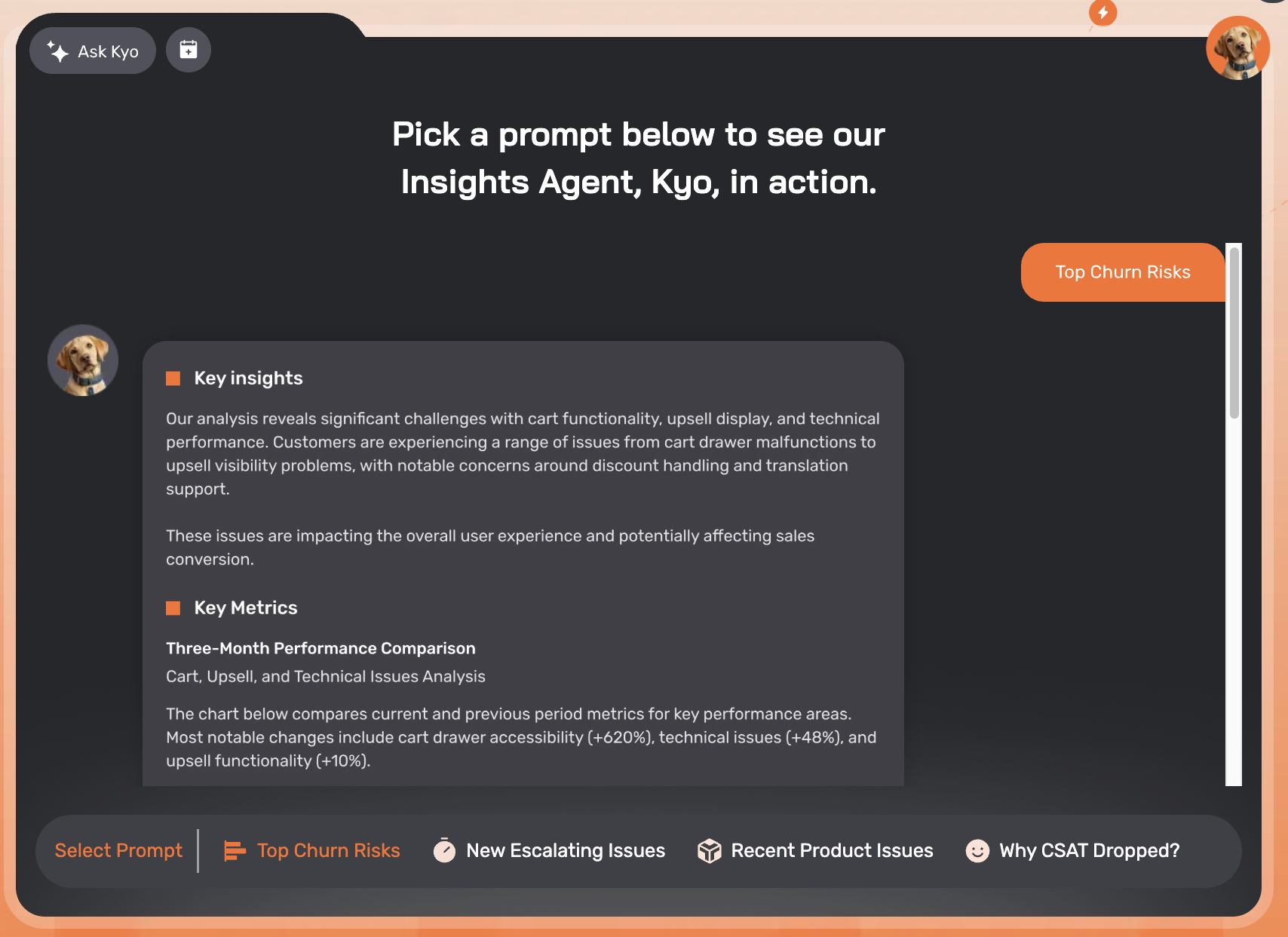
Each response is evaluated against internal confidence thresholds before it is shown, ensuring Kyo stays reliable and data-grounded. When patterns are unclear or unsupported, the system guides users rather than guessing.
It is not magic. It is method. And that method keeps teams confident that what they are seeing reflects real customer signals, not AI imagination.
Why It Matters
If you analyze customer feedback in small volumes, a general LLM may do the job. However, when you are dealing with thousands of interactions across channels, scale and precision start to matter.
Kyo gives teams the confidence to move from guessing to knowing. It is the difference between reading a summary and seeing the evidence that supports it. Each response carries the proof: real quotes, sentiment scores, and verified data.
For CX, Product, and Operations teams, this changes how decisions are made. Time once spent validating or reinterpreting AI output is now spent acting on it. Teams align more easily and make decisions that are visibly grounded in fact.
Kyo is PII safe by design, with SOC 2 Type II compliance, GDPR alignment, and full audit trails for traceability. For enterprise-scale organisations, that assurance turns insight into a dependable operational layer rather than an experiment.
Checklist: When Is The Right Time to Explore Kyo?
If your current LLM workflow is working, keep going:
- You are getting accurate answers from customer data
- It is easy to validate and share insights internally
- Teams trust the summaries without double-checking
But if you are starting to see:
- Confusing or inconsistent answers from your AI tools
- Extra time spent verifying what the model meant
- Gaps between what you think customers are saying and what they are actually saying
Then it might be time to explore Kyo, your CX teammate built for clarity, not complexity.
Kyo does not replace creativity. It complements it. It brings the same accessibility we like about LLMs, but with the reliability and attention to detail that customer insight demands.
What’s Next for Kyo
Kyo’s next chapter is about presence. It will evolve into an always available CX teammate, accessible wherever teams work, from Slack and Teams to your core customer platforms. Insights will surface in the moments when decisions are made, not afterwards.
Don't just take our word for it. Hear it from our customers.
As part of this evolution, we are exploring lightweight human in the loop feedback to refine accuracy in a controlled and transparent way. The goal is not to make Kyo bigger or busier. It is to make customer truth easier to reach and simpler for teams to validate and improve together.
As Kyo continues to develop its understanding of language, context, and team workflows, it will help every department see the same picture of the customer at the same time. That is how accuracy scales when understanding becomes second nature.
Kyo was built for one purpose: to make what your customers are saying unmistakably clear. The next chapter is about bringing that clarity to every part of your business.
Frequently Asked Questions
Explore Real Success Stories

Explore Success Stories


Talk to a Data Expert